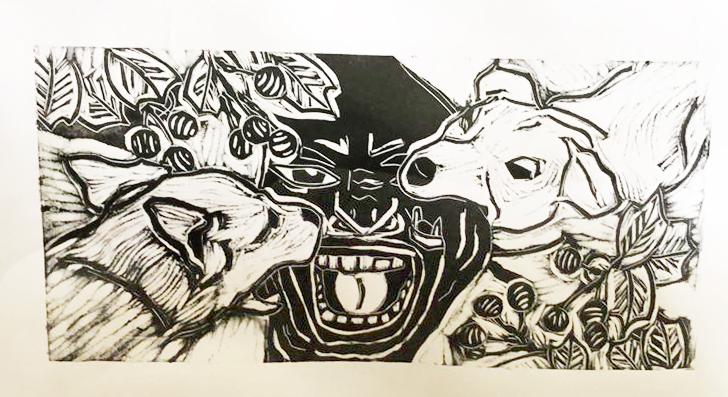
Der Mann von Calafate / Der Mann aus Calafate
Kaufanfrage
Dieses Werk verbindet die zentrale Metapher des Calafate – verstanden als Symbol einer bitteren Erinnerung, mit der man sich auseinandersetzen muss, um voranzukommen – mit der Ikonographie von Schmerz und Widerstand während der chilenischen Militärdiktatur (1973–1990). Anstatt Folter explizit oder sensationslüstern darzustellen, das Bild ruft seinen Schatten hervor, seine psychologischen Folgen, und der anhaltende Kampf um die Bewahrung der Erinnerung.
Der Calafate-Mann ist nicht nur eine Darstellung von Schmerz; es wird zu einem Denkmal der Widerstandsfähigkeit. So wie der Holzschnitt den Akt des Schnitzens erfordert – einen Einschnitt, der die Oberfläche dauerhaft markiert –, um ein Bild freizulegen, Das kollektive Gedächtnis einer Nation muss sich den eingravierten Spuren ihrer Geschichte stellen, um ihre wahre Identität wiederherzustellen. Die Wunde wird zur Form. Die Narbe wird zum Bild.
Durch diesen materiellen und symbolischen Prozess, Das Kunstwerk spiegelt die Beziehung zwischen Trauma wider, Erinnerung, und Überleben. Die gravierte Textur, die Kraft des Schnittes, und die Beständigkeit der Tinte dienen alle als Metaphern für die menschliche Fähigkeit, durchzuhalten, zu erinnern, und dem Vergessen zu widerstehen.