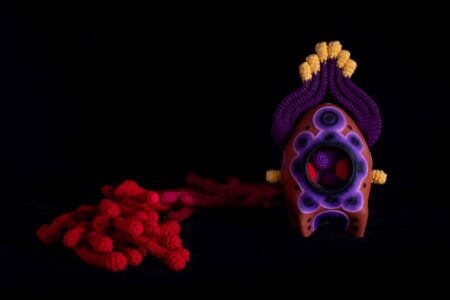
Gruppenausstellung – Fäden der Erde


„Materialien implizieren ein bestimmtes Schicksal oder, wenn du willst, a certain formal vocation.”
— Henri Focillon, The Life of Forms
The ways in which human beings understand and relate to their surroundings have historically been shaped by scientific, sensorisch, und symbolische Perspektiven. Diese Ansätze ermöglichen es uns, die Komplexität der natürlichen Welt zu interpretieren und gleichzeitig Verbindungen zwischen dem Sichtbaren und den Phänomenen herzustellen, die über die unmittelbare Wahrnehmung hinausgehen.
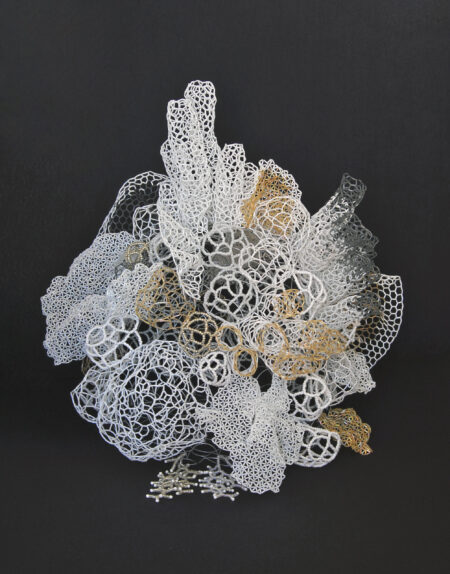
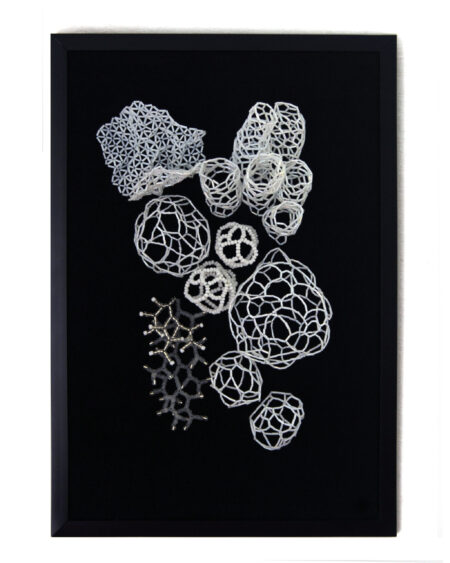
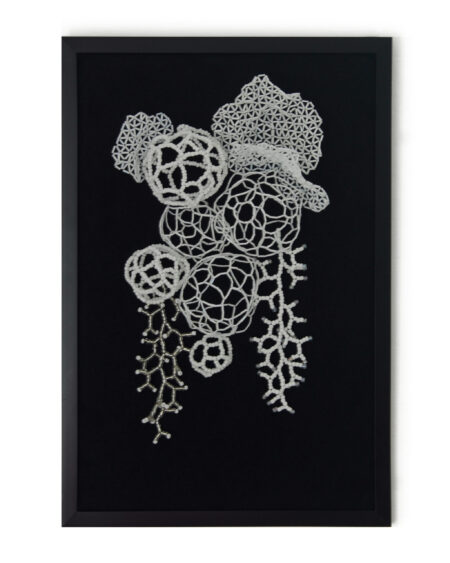
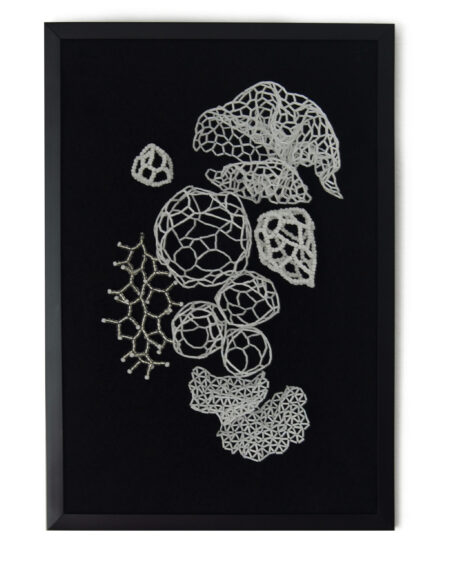
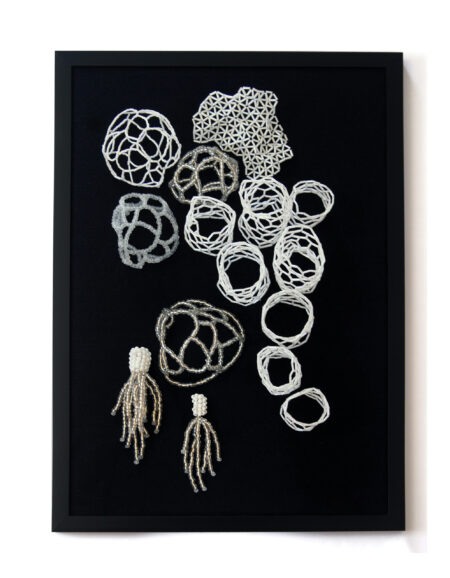
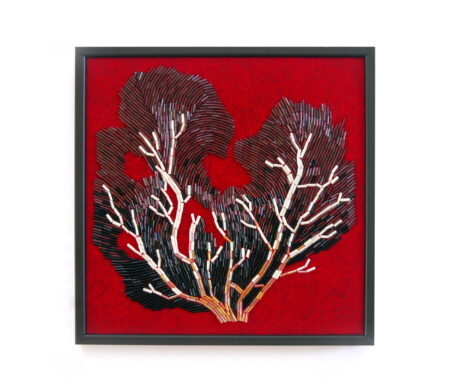
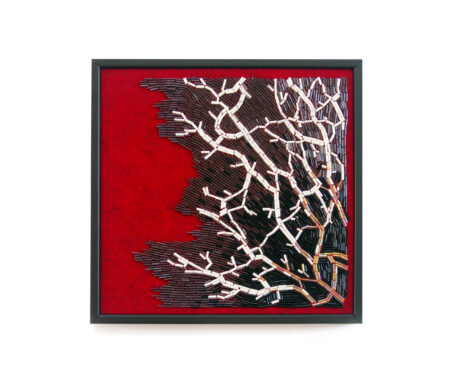
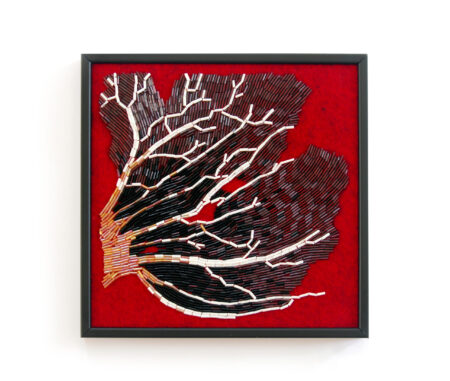
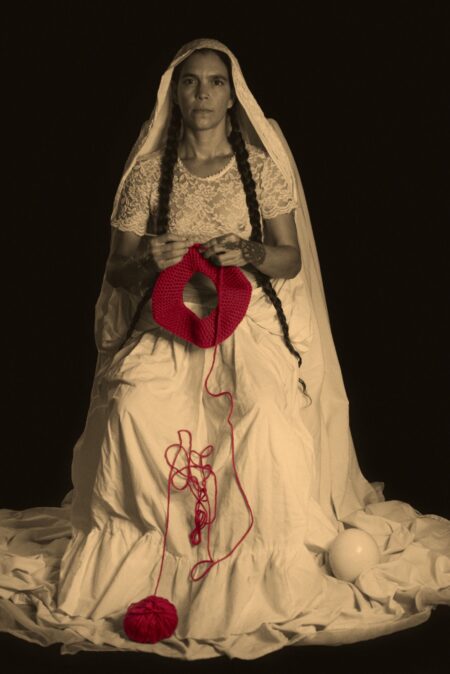
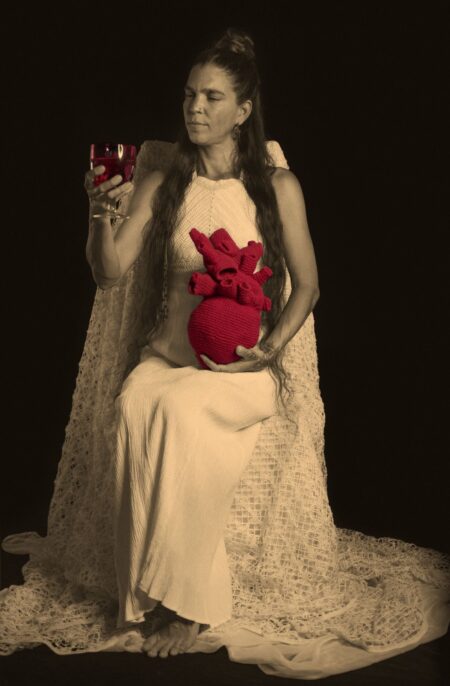
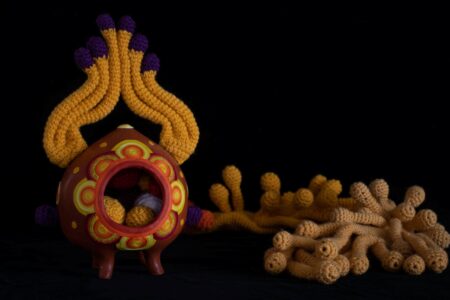
Aus dieser Perspektive, Fäden der Erde brings together three artistic practices that explore vital and cosmic cycles associated with growth, Mutation, Verschlechterung, and regeneration. Rather than converging toward a homogeneous resolution, each artist develops a distinct methodology rooted in textile art, establishing connections with other languages of contemporary visual art, including photography, Malerei, Installation, and ceramics.
Within this framework, textile practices function as an organizing principle for different supports and ways of producing meaning. Connected to ancestral practices and transmitted forms of knowledge, textiles acquire new discursive possibilities, while their physical qualities actively participate in the conceptual construction of the works. Fibers, Glasperlen, surfaces, images, Objekte, pigments, and materials of diverse origins come together through processes in which every stitch and every connection retains traces of its own making.
Materials and processes thus become vehicles of memory, weaving individual experiences into collective narratives and expanding the ways in which personal experience and its relationship with the surrounding world can be understood.
The intersections that emerge—between matter and symbol, nature and the cosmos—coexist with the formal, procedural, and conceptual differences that distinguish each artistic practice. It is precisely this tension between affinity and divergence that expands the exhibition’s possibilities of interpretation. While preserving their autonomy, the works construct a shared territory in which transformation unfolds both through the larger cycles that shape their imaginaries and through the smallest scale of gesture and making.
Ana Beatriz Almeida Sánchez
September 2026