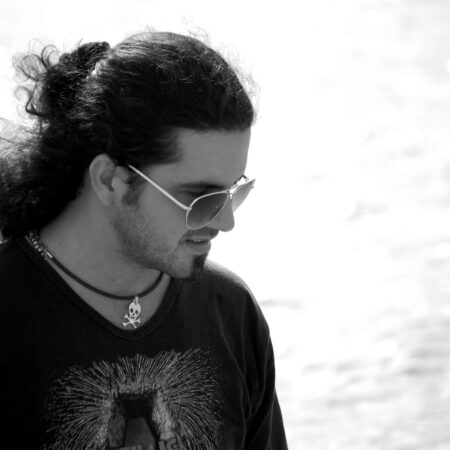
Duvier del Dago bei der Biennale der Havanna


ArteMorfosis has the pleasure of collaborating with the Cuban artist Duvier del Dago (*1976, Zulueta, Villa Clara), at the XV Bienal de La Habana. Our colaoration started in 2017 mit his solo exhibition STEHEN ZU in unserer Zürich-Galerie. Unsere Partnerschaft hat sich seitdem auf verschiedene Veranstaltungsorte ausgeweitet, einschließlich events in Como, the 14th Bienal, und mehrere Online- und Virtual-Reality-Ausstellungen.
Im XV Biennale von Havanna (2024/2025), we are thrilled to work with Duvier on three major contributions. Auf diesen Seiten, Sie finden eine exklusive Dokumentation des kreativen Prozesses, Künstleraussagen, and highlights from the Bienal.
Del Dago ist bekannt für seine Auseinandersetzung mit der kubanischen Identität anhand symbolischer und architektonischer Motive, Oftmals betrachten wir die Geschichte aus einer persönlichen Perspektive. Seine Arbeit umfasst Ikonen wie das Capitolio von Havanna, zieht Parallelen zu seinem Namensvetter in Washington D.C., aber mit einer deutlich kubanischen Interpretation. Symbole wie La República, eine weibliche Figur, inspiriert von der europäischen Moderne, und die dreifarbige Flagge Kubas verweisen auf entscheidende Momente in der kubanischen und globalen Geschichte.
Duviers Ansatz widersetzt sich dem linearen Geschichtenerzählen, Sie nutzen räumliche Beziehungen und ein komplexes Design, um den Betrachter zu einem interpretativen Erlebnis einzuladen. Seine Kompositionen regen zur persönlichen Reflexion an, denn er kombiniert feine Aquarelltechniken mit skulpturalen Installationen, wo Licht, Schatten, und Fäden erwecken seine Kreationen zum Leben.
Duviers Reise, aus Kindheitseinflüssen wie dem Zulueta-Partys zu seinem Studium am Higher Institute of Art, hat seine Entwicklung als visueller Experimentator vorangetrieben. Seine charakteristischen Installationen basieren auf Fiktion und Realität, Wir verbinden traditionelle Methoden mit innovativen Techniken, um immersive Erlebnisse zu schaffen. Durch diese Verschmelzung von Material und Metapher, Duviers Werk ist einzigartig, poetisches Zeugnis des kulturellen Gefüges Kubas.
The Making of the Three Installations of the XV Bienal de La Habana
Beginnend mit einem Leerzeichen …..

… oder Babybettwäsche

… oder eine Technik

(Click on photos for details of the projects)
A Profile of Duvier del Dago
Duvier del Dago, born in Zulueta, Kuba, In 1976, is a contemporary artist who lives and works in Havana. He is renowned for his intricate installations and thought-provoking investigations of Cuban identity, Geschichte, and the influence of technology on society. Del Dago’s artistic journey began with early influences like the Zulueta-Partys Karneval, where he observed the transformation of designs into large-scale, three-dimensional floats. This experience sparked his interest in drawing and spatial imagination, which later evolved into his signature thread sculptures.
Education and Artistic Influences
Del Dago pursued formal art education, first at the „Oscar Fernández Morera“ school in Trinidad and later at the Höheres Institut für Kunst (IST EIN) in Havanna. During his time at ISA, he was exposed to influential artists and professors, such as René Francisco Rodríguez, Eduardo Ponjuan, Lazaro Saavedra, Belkis Ayon, und Ramón Cabrera Salort, unter anderem. This period proved pivotal in shaping his artistic vision and technical skills. He credits his time at ISA with encouraging him to experiment with various media and engage in collaborative projects, which ultimately helped him to develop his unique style.
Artistic Style and Thematic Concerns
Del Dago’s work is characterized by his meticulous approach to construction, blending conceptual ideas with skilled craftsmanship. His installations are carefully planned and executed, responding to the specific context of their location. He is known for his signature thread sculptures, created by meticulously weaving threads to form three-dimensional figures. Del Dago uses ultraviolet lighting to illuminate the threads, creating a holographic effect that adds a mesmerizing quality to his work.
A recurring theme in his art is the exploration of Cuban identity and history. He incorporates symbolic motifs, wie zum Beispiel „Die Republik,“ eine weibliche Figur, inspiriert von der europäischen Moderne, und die kubanische Flagge, to represent significant moments in Cuban history. His art goes beyond mere representation, aiming to capture the essence of Cuban life through personal experiences and observations of everyday realities.
Engagement with Technology
Del Dago is interested in the interplay between technology and humanity. His series „Error humano“ (Menschlicher Fehler) examines the relationship between technology and nature, drawing parallels between natural forms and man-made objects, such as drones and submarines. This series reflects his concern about the ethical implications of technology, particularly its potential to erode human values and privacy. His exhibition „Stehen zu“ uses drone imagery to critique the increasing surveillance and control in modern society, encouraging viewers to think critically about the potential consequences of unfettered technological advancement.
The Significance of Public Spaces
Del Dago prefers to create art in public spaces because he wants to reach a broader audience and engage with a variety of perspectives. He recognizes that public spaces have inherent meaning and aims to create installations that interact with their original function, adding new layers of interpretation and sparking dialogue about the themes he explores.
In summary, Duvier del Dago is a multifaceted artist who draws inspiration from his Cuban heritage and engages with contemporary issues surrounding technology and its impact on society. His meticulously crafted installations, often featuring his signature thread sculptures, invite viewers to contemplate the complexities of Cuban identity, Geschichte, and the ever-evolving relationship between technology and humanity.