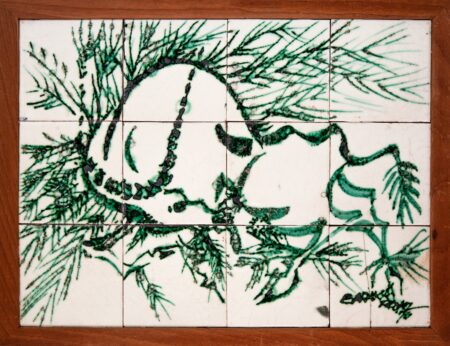
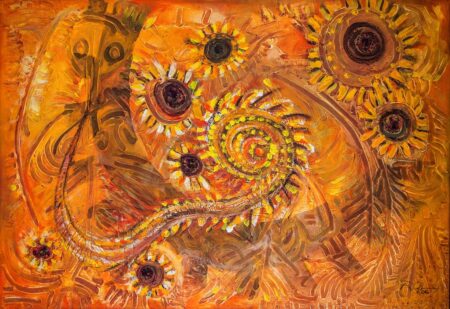
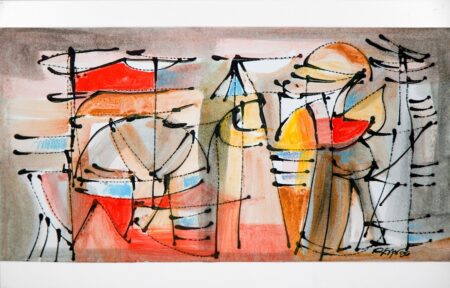
Collection: Museo Familiar Reinaldo López
The Cuban master of contemporary visual arts, Reinaldo López Hernández (Matanzas, 1934 – Havana, 2014), lived a prolific creative life devoted primarily to two artistic fields —the visual arts and architectural and landscape design. A holder of an extensive personal portfolio and an artist with a vast creative repertoire, he left to Cuban culture a body of work of universal scope. His pieces form part of prestigious public and private collections in Cuba and abroad, including the National Museum of Fine Arts (MNBA), the National Council of Plastic Arts (CNAP), and the Pérez Comendador-Leroux Museum Consortium Collection in Extremadura, Spain.
Encouraged by his father, who nurtured his passion for drawing, and guided by his mentor and lifelong friend Roberto Diago Querol, López studied painting and drawing in the 1950s at the “Eduardo Tarascó” School of Fine Arts in his hometown of Matanzas. In 1954, alongside fellow artists Juan Blanco López, Agustín Drake, and José M. Fundora, he presented his first collective exhibition at Havana’s newly inaugurated La Rampa Gallery, which received highly favorable reviews from specialized critics of the time.
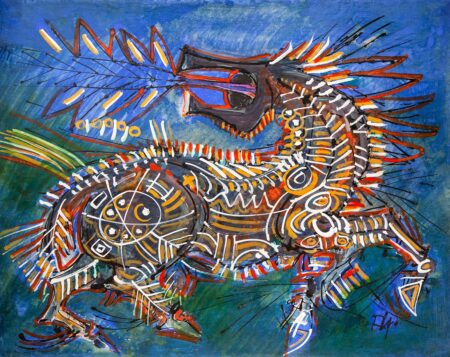
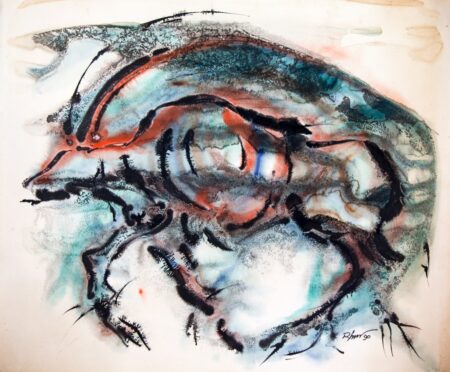
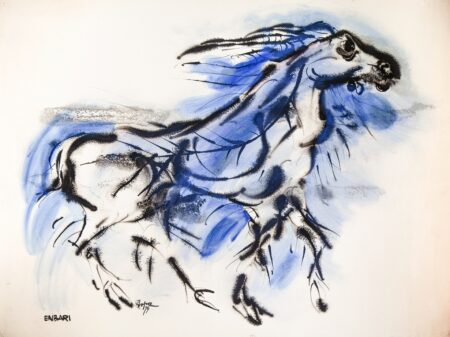
López’s pictorial work, recognized early on for its refined drawing, vibrant color palette, washes, and textures, moves between abstraction and figuration, combining personal symbols and codes that became hallmarks of his style. This synthesis is evident in his series of female nude drawings and in Animalia —his iconic, widely collected series— where an imaginary fauna of horses, gazelles, goats, deer, bulls, and wild birds burst forth in a vigorous stampede before the viewer. Cuban art critic Lolo de la Torriente described these works as:
“They are not paintings of race but of imaginary beings—animated, rearing creatures, ready to attack, to leap and run in a frenzy of primitive, life-saving vitality.”
A landmark moment in his career came in 1967, when López was among the 100 contemporary artists who participated in the creation of the monumental mural Cuba Colectiva during the French “Salon de Mai” held in Havana —a work that now belongs to the MNBA’s permanent collection. Throughout his trajectory, he experimented with traditional supports as well as materials such as wood, ceramics, and in the 1990s, X-ray plates.
A lesser-known yet significant facet of his production was his mural art. Among his most celebrated works are Canto a las Antillas (Hotel Tritón, Havana), Los Galápagos (Lenin Park, Havana), La Tierra y el Mar (Hotel Paradiso, Varadero), and El Bien y el Mal (Hotel Pasacaballos, Cienfuegos). These monumental pieces, created using diverse techniques, have since been declared national heritage.
Following his passing in October 2014, his family became the custodian of an extensive artistic legacy that includes his works as well as those of other Cuban and international artists. A diverse collection of folk art and antique objects, acquired during his travels across Cuba and abroad, further enriches this patrimony.
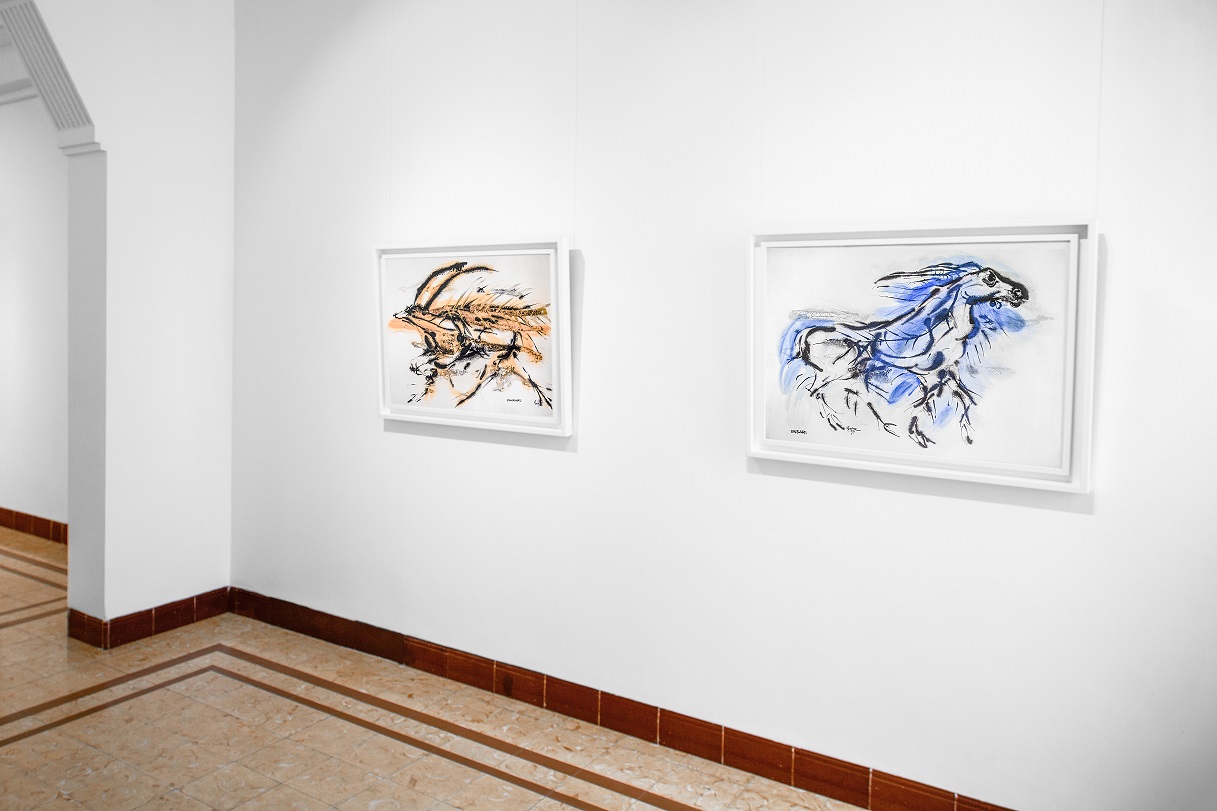
With the purpose of preserving, promoting, and sharing this legacy, the López-Ximeno family founded the “Reinaldo López Family Museum: Oasis of Drawing and Color.” Visiting the artist’s studio offers a glimpse into the intimate world of a man who devoted his life to the Afro-Cuban artistic tradition. Through careful curation and detailed museography, the exhibition recreates the painter’s workspace, displaying objects, tools, and materials he used in his creative process.
The collection features artworks executed in diverse techniques representing the many stages of his artistic evolution. It is further enriched by the display of his personal pipe collection, Ecuadorian ceramics, Mexican folk art, and 19th-century maroon artifacts, as well as works by his mentor Roberto Diago Querol.